
| 126+ AHUs | 338+ EC fans | 50%+ energy savings | Same Design Parameters | Payback < 2 years |
Same Airflow. Same Pressure Cascade. Half the Fan Energy: Closed-Loop EC Fan Retrofit Across 126 AHUs
A global pharmaceutical manufacturer operates a tablet and oral solid dosage (OSD) formulation plant in Visakhapatnam, Andhra Pradesh. The facility is served by 126 air-handling units supporting controlled manufacturing areas, where airflow, static pressure, and room-to-room pressure differentials are validated parameters. At this scale, ventilation is not a utility. It is part of the controlled manufacturing environment, and any change to it carries revalidation consequences under cGMP.
The Challenge
The systems at the facility were equipped with conventional belt-driven fans operating at a fixed speed. Filter loading raised system resistance over time and ACPH moved away from its validated value between manual checks. Door openings disturbed the pressure differential between clean and less-clean zones in the same way, and a fixed-speed fan required manual speed adjustments.
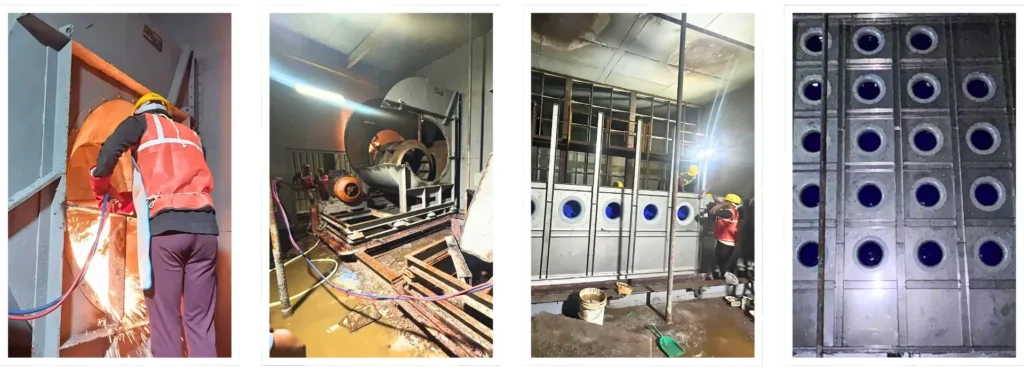
Manual rebalancing cannot keep pace with 126+ independent drift points. In the gap between a parameter drifting and someone catching it, particle recovery time after an intervention or cleaning cycle became inconsistent. The retrofit also carried a hard boundary: the same airflow and the same pressure cascade had to be retained, because any material change would raise revalidation concerns in an operating plant. The real question was how to hold ACPH constant, maintain a stable pressure cascade, and ensure repeatable particle recovery across the whole fleet without changing the validated operating conditions.
The Solution
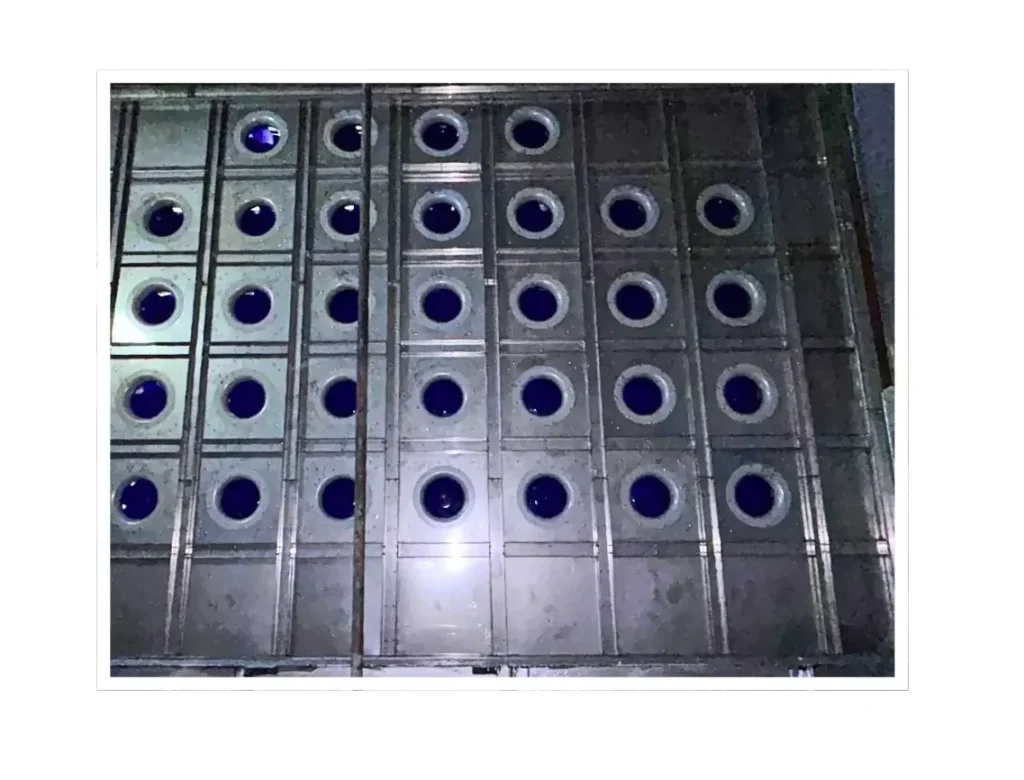
AAD Tech retrofitted 338+ EC fans into the 126+ installed AHUs, replacing the belt-driven assembly (motor, belt, pulley, VFD, starter and electrical panel) while keeping the AHU casings, coils and filters in place. Each fan is paired with a closed-loop controller. A pressure sensor reads the room condition continuously; the controller compares it with the facility’s validated target, and the EC fan modulates its speed to hold that target. Pressure drops, the fan output rises. Filters load, the system compensates within defined limits. Door events are corrected as they happen, not at the next manual round.