
Cleanrooms in hot, humid climates face extreme HVAC stress. Conventional fan selection often fails here because it ignores humidity-driven resistance and part-load instability. Consultants and engineers learning how to choose an EC fan for cleanrooms in hot climates must first acknowledge that Electronically Commutated (EC) fans are precision airflow tools, not just energy-saving upgrades. Proper selection dictates pressure stability, filtration loading, and HVAC resilience.
Why HVAC Challenges Intensify in Humid Climates
High moisture levels force HVAC systems to work harder.
- Elevated Latent Loads: High outdoor humidity demands constant moisture removal. Wet cooling coils significantly increase the total pressure drop.
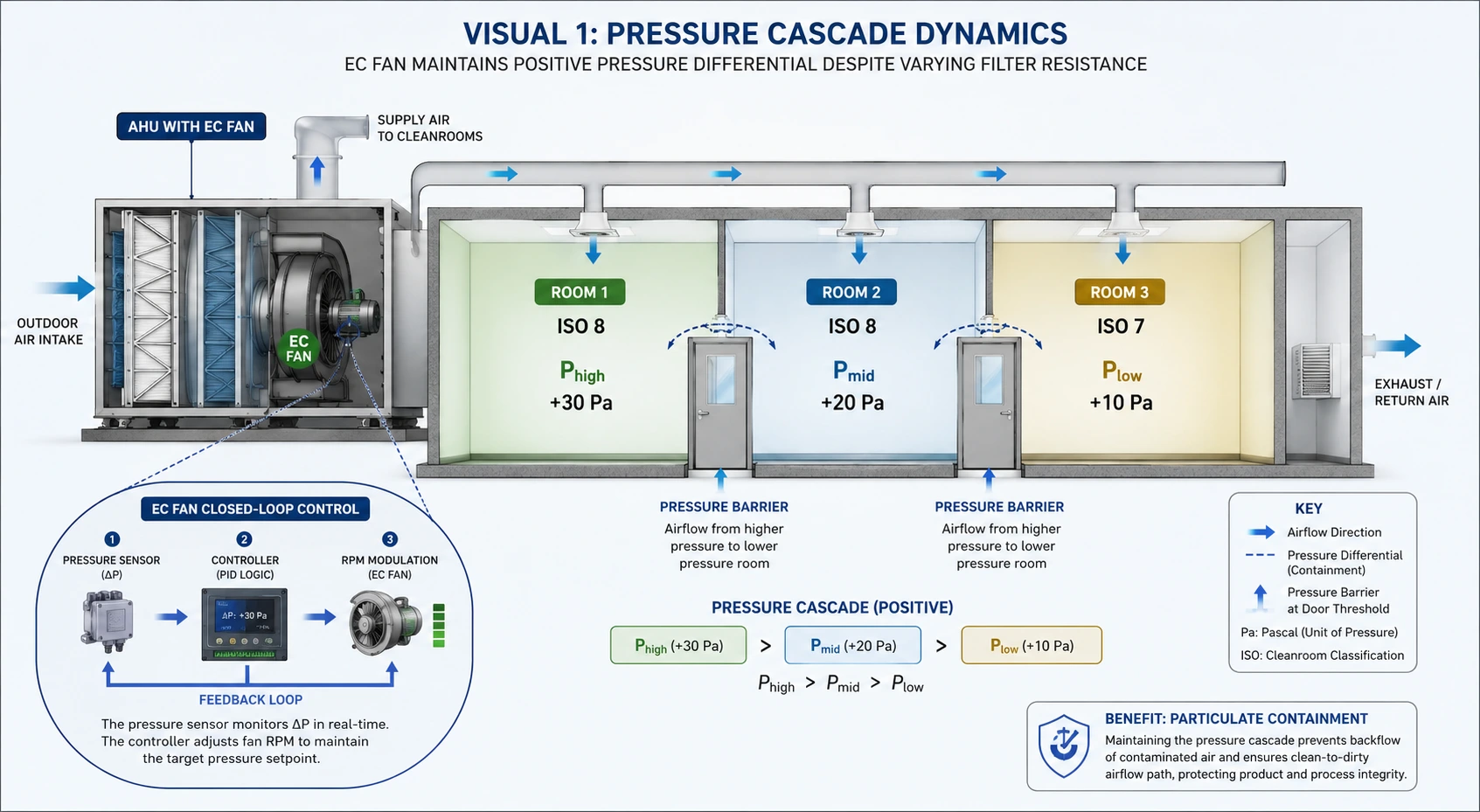
- Pressure Cascade Instability: Precise room differential pressure (ΔP) prevents contamination migration. Improper fan sizing destabilises these pressure zones during filter loading.
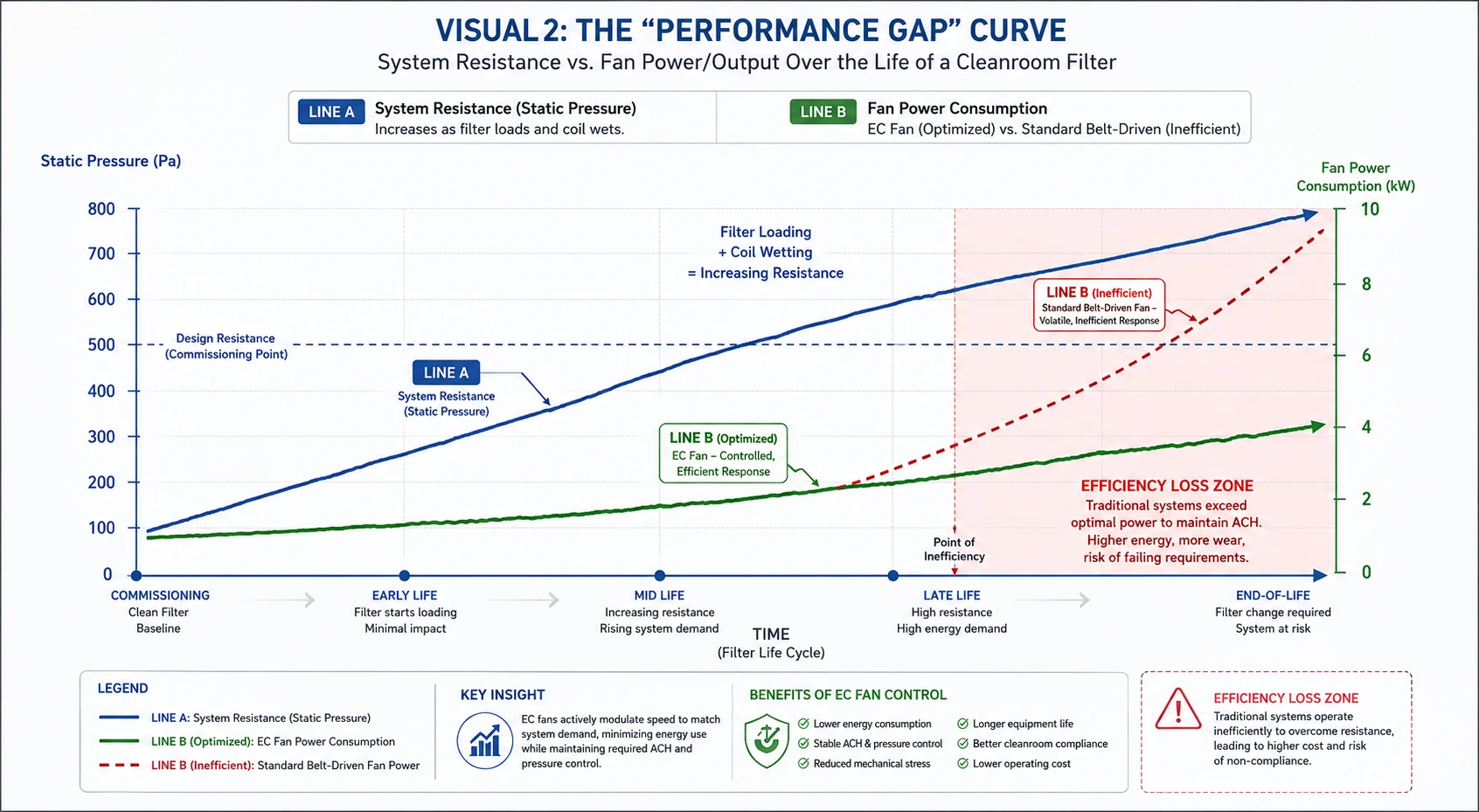
- HEPA Filtration Sensitivity: Humid air accelerates filter fouling and coil wetting. This rise in static pressure creates dead zones and compromises airflow uniformity.
- Condensation Risk: Moisture buildup on internal components leads to corrosion and microbial growth, which is critical in coastal industrial zones.
Why Modern Cleanrooms Require EC Fans
EC fans function as intelligent, controllable assets.
- Stable Airflow: Precise RPM modulation maintains constant airflow as filters load.
- Pressure Integrity: Fans respond instantly to pressure changes, maintaining vital positive pressure zoning.
- BMS Integration: Native Modbus and BACnet support enable real-time airflow logic and static pressure reset.
- Turndown Efficiency: EC technology maintains Air Changes per Hour (ACH) consistency and pressure stability even at low speeds.
Critical Selection Factors
Engineers must look beyond peak airflow to ensure reliability.
- Evaluate ESP Realistically: Size fans for end-of-life (dirty) filter conditions and wet-coil resistance.
- Prioritise Humidity Resilience: Select IP-rated electronics and tropicalised motor assemblies to prevent condensation and corrosion.
- Ensure Partial Load Stability: Select fans that maintain ACH and pressure control at low speeds, as most cleanrooms operate at low speeds.
- Demand Low Vibration: Eliminate belt-related imbalances to protect sensitive instrumentation and prevent duct fatigue.
Common EC Fan Selection Mistakes in Humid Climates
- Sizing for Peak Flow Only: Failing to account for “dirty” static pressure leads to system failure.
- Ignoring Latent Loads: Underestimating humidity spikes causes moisture issues and comfort failures.
- Neglecting Redundancy: Relying on a single large fan creates a single point of failure.
- Overlooking Harmonic Distortion: Poor electronic design can create electrical noise that disrupts sensitive ISO 14644 cleanroom controls.
Engineering Quick-Reference: EC Fan Selection Parameters
| Parameter | Why It Matters | Requirement for Humid Climates |
| Static Pressure (ESP) | Determines system output against resistance. | Size for “dirty” filter + wet coil conditions. |
| Humidity Protection | Prevents electronic failure and corrosion. | IP-rated electronics + tropicalised motors. |
| BMS Integration | Allows real-time airflow and pressure control. | Native Modbus or BACnet protocol support. |
| Partial Load Stability | Maintains ACH during low-occupancy periods. | High turndown efficiency (<50% speed). |
| System Redundancy | Prevents total system failure. | Deploy in fan arrays for modular flexibility. |
Frequently Asked Questions
Yes. Without tropicalised, IP-rated protection, moisture causes internal condensation and electronic failure.
Always size for end-of-life filter conditions to guarantee required air changes throughout the filter’s service life.
Yes. An EC fan’s rapid RPM adjustment maintains stable differential pressure even when doors open or filters clog.
Arrays offer modular redundancy, better airflow uniformity across the filter, and lower maintenance risk.