Most buildings standing today were designed for a very different energy reality. Electricity was cheaper, sustainability was rarely discussed, and systems were built to last, not necessarily to optimise. That often leads building owners to pause mid-audit and ask a simple but important question: Can an older building really perform like a modern one without starting from scratch?
This is where retrofitting enters the conversation. Rather than replacing entire systems or demolishing existing structures, retrofitting focuses on improving what already exists. Done thoughtfully, it offers one of the most practical paths to lower energy consumption, reduced operating costs, and better indoor comfort.
What Does Retrofitting Really Mean?
At its core, the retrofitting of buildings involves upgrading systems, components, or materials to improve performance without changing the building’s fundamental structure. This could mean improving insulation, modernising HVAC systems, upgrading lighting, or adding smarter controls that respond to real usage patterns.
Many people assume retrofitting is only about energy savings, but it often improves comfort, air quality, and system reliability as well. When you think about how much time people spend indoors, those benefits start to matter just as much as reduced power bills.
Why Retrofitting Is Gaining Attention Now?
Energy costs are rising, regulations are tightening, and sustainability targets are becoming harder to ignore. In this context, it’s natural to wonder whether investing in an old building still makes sense. Retrofitting answers that concern by offering measurable improvements without the cost and disruption of a full rebuild.
In fact, studies consistently show that energy retrofits can reduce building energy consumption by 20 to 40 percent, depending on the scope of upgrades. That kind of reduction directly affects long-term operating budgets and asset value.
For many owners, the question shifts from why retrofit? to why wait?
Discover how AHU retrofit improves efficiency and payback.
Key Areas Where Retrofitting Makes the Biggest Impact
1. HVAC and Air Handling Systems
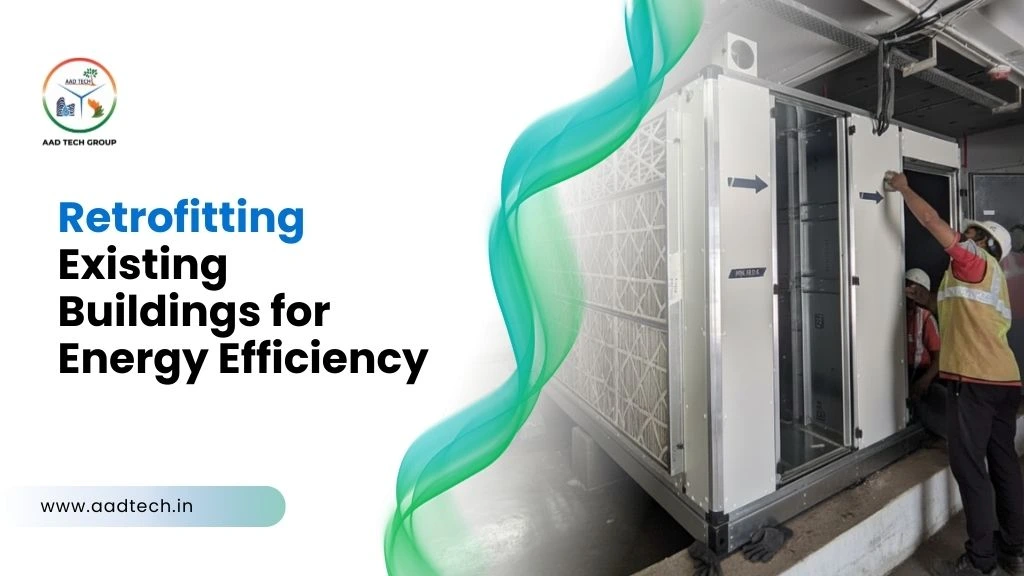
Heating, ventilation, and air conditioning systems are often the largest energy consumers in a building. Older systems tend to operate at fixed speeds and lack modern control logic. Retrofitting these systems with energy-efficient fans, upgraded air handling units, or variable speed drives allows performance to match real demand.
This is where retrofit energy efficiency becomes tangible. Instead of running at full load all day, systems adapt, saving energy while maintaining comfort.
2. Building Envelope Improvements
Walls, roofs, and windows form the barrier between indoor and outdoor environments. Poor insulation or outdated glazing can cause constant heat gain or loss, forcing HVAC systems to work harder.
Retrofitting insulation, sealing air leaks, or upgrading windows may seem less technical, but these changes often deliver consistent energy savings year after year. Many building owners are surprised by how much comfort improves once these basics are addressed.
3. Lighting and Controls
Lighting retrofits are often the first step because they offer quick returns. Replacing traditional fixtures with efficient LED systems, combined with occupancy sensors or daylight controls, reduces both energy use and maintenance.
While lighting alone may not transform a building, it plays an important supporting role in broader retrofit strategies.
4. Smart Monitoring and Automation
One of the most overlooked aspects of the retrofitting of buildings is visibility. Older buildings often lack data. Without insight into energy use, inefficiencies go unnoticed.
Adding smart meters, sensors, and building management systems allows facility teams to track performance, spot anomalies, and optimise systems over time. Energy efficiency improves not just through hardware upgrades, but through better decisions.
Is Retrofitting Really Cost-Effective?
This is often the first concern raised during planning discussions. Retrofitting typically requires lower upfront investment compared to major reconstruction, and many upgrades pay for themselves through energy savings within a few years.
Beyond direct savings, retrofit projects can extend equipment life, reduce maintenance costs, and improve compliance with evolving energy regulations. When evaluated over the full lifecycle of a building, retrofitting often proves to be the more financially sensible option.
In practical terms, retrofit energy efficiency is less about cutting corners and more about investing where returns are predictable.
Retrofitting Without Disrupting Daily Operations
Another common hesitation is disruption. Many buildings cannot afford extended downtime. The advantage of retrofitting is that upgrades can often be phased, scheduled during low-use periods, or implemented system by system.
This flexibility allows businesses to improve energy performance while continuing normal operations, something full replacements rarely allow.
Why Expertise Matters in Retrofit Projects?
Retrofitting is not about adding the newest technology everywhere. It is about understanding how existing systems behave, where energy is being lost, and which upgrades will deliver the most value.
This is where experienced solution providers make a difference. At Aad Tech, we approach retrofit projects by first understanding how a building actually operates, then aligning upgrades to real performance gaps. This ensures that energy improvements are practical, measurable, and sustainable over time.
Conclusion
Retrofitting existing buildings is no longer a compromise solution. It is a strategic approach to reducing energy consumption, improving comfort, and extending the useful life of valuable assets. The retrofitting of buildings allows owners to respond to modern energy challenges without abandoning existing infrastructure.
When planned carefully, retrofit energy efficiency delivers benefits that go beyond lower bills, including better system reliability, improved indoor environments, and long-term operational confidence.
At Aad Tech, we support retrofit journeys that balance technical performance with real-world practicality, helping buildings evolve without unnecessary disruption.
Frequently Asked Questions
Building retrofitting involves upgrading existing systems and components to improve energy efficiency and performance without altering the building’s basic structure.
Depending on the scope, retrofitting can reduce energy consumption by 20 to 40 percent or more.
Yes, retrofitting usually requires far lower capital investment than demolition and reconstruction while delivering significant performance gains.
HVAC systems, lighting, insulation, and controls typically offer the highest returns.
In most cases, yes. Retrofit projects can be phased to minimise disruption.
Yes, energy-efficient buildings often have higher asset value, lower operating costs, and better regulatory compliance.