
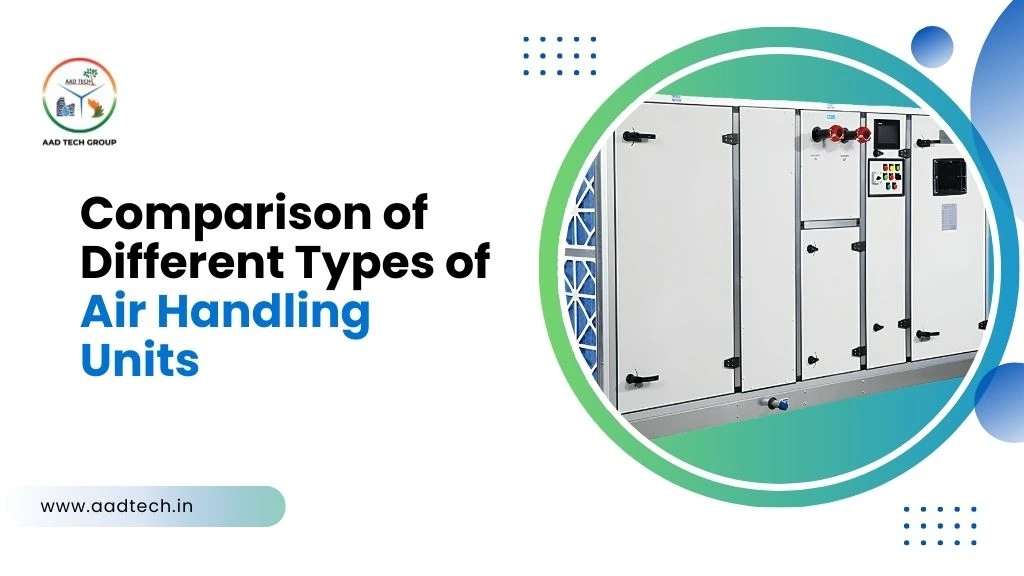
Air handling units sit quietly behind walls, ceilings, and plant rooms, yet they shape how a building feels every single day. From temperature and airflow to air quality and energy use, almost everything depends on how well the AHU is designed. This often leads building owners and facility managers to pause mid-discussion and ask themselves, Are we even using the right kind of unit for this space?
With so many configurations available today, understanding the types of air handling units is no longer just a technical exercise. It is a practical decision that affects operating cost, comfort, compliance, and long-term system health. This guide breaks down the most common AHU designs and compares where each one fits best.
Why AHU Type Matters More Than You Think?
Not all buildings breathe the same way. A hospital, a data centre, and a commercial office block each place very different demands on airflow, filtration, and temperature control. Yet many issues begin when the AHU is selected based on size alone rather than function.
Modern AHU systems are expected to handle fluctuating occupancy, stricter air-quality norms, and rising energy costs. When the wrong type is used, the result is often higher power consumption, uneven cooling, and frequent maintenance concerns. Choosing the right configuration early can prevent years of inefficiency later.
6 Major Types of Air Handling Units
1. Packaged Air Handling Units
Packaged air handling units come as pre-assembled systems with fans, coils, filters, and controls housed within a single casing. These units are typically factory-built and delivered ready for installation.
They are often used in commercial buildings, malls, and medium-scale industrial spaces where quick deployment is important. Many facility teams ask mid-planning whether packaged units limit flexibility, and the answer depends on the application. While they are easy to install and cost-effective upfront, their layout offers less customization compared to modular designs.
Among the types of air handling units, packaged AHUs are best suited for standard applications with predictable load patterns.
2. Modular Air Handling Units
Modular AHUs are built in sections and assembled on site. This design allows engineers to customise airflow paths, filtration stages, heat recovery components, and access points based on the building’s exact requirements.
These units are commonly found in large commercial complexes, hospitals, and industrial facilities. Many operators realise mid-operation that airflow needs evolve over time, and modular AHU systems make future upgrades far easier.
Their flexibility makes them a preferred choice when performance precision and long-term adaptability matter more than rapid installation.
3. Rooftop Air Handling Units
Rooftop AHUs are designed to be installed outdoors, freeing up valuable indoor space. They are commonly used in retail centres, warehouses, and commercial buildings where plant room space is limited.
A common question arises during design reviews about weather exposure, and modern rooftop units are built with weather-resistant enclosures to handle external conditions. However, maintenance access and noise control must be planned carefully.
Within the broader types of air handling units, rooftop systems offer space efficiency but require thoughtful placement and servicing strategies.
4. Cleanroom Air Handling Units
Cleanroom AHUs are engineered for environments where air purity is critical. These units support precise filtration levels, controlled air changes, and pressure balancing to prevent contamination.
They are widely used in pharmaceutical manufacturing, healthcare facilities, laboratories, and electronics production. Operators often ask how these units differ from standard designs, and the answer lies in their filtration depth, airflow uniformity, and monitoring systems.
Cleanroom AHUs represent a specialised category within AHU systems, where performance consistency outweighs cost considerations.
5. Heat Recovery Air Handling Units
Energy efficiency has become a priority across industries, leading many to explore heat recovery AHUs. These units capture heat from exhaust air and reuse it to condition incoming fresh air.
They are commonly installed in offices, educational buildings, and facilities with high fresh-air requirements. When teams question whether heat recovery really delivers savings, operational data often confirms reduced energy demand over time.
Among the types of air handling units, heat recovery designs stand out for balancing indoor air quality with lower energy consumption.
6. Hygienic Air Handling Units
Hygienic AHUs are designed to meet strict cleanliness and safety standards. Smooth internal surfaces, corrosion-resistant materials, and easy-to-clean layouts help prevent microbial growth.
These units are essential in hospitals, food processing plants, and pharmaceutical facilities. Many compliance challenges stem from using standard units in sensitive environments, which is why hygienic AHU systems exist as a dedicated category.
Their value lies not just in airflow but in maintaining health and regulatory confidence.
Comparing AHU Types at a Glance
Each AHU type serves a distinct purpose, and comparison often comes down to usage rather than technology. Packaged units offer speed and simplicity. Modular systems provide flexibility. Rooftop units save space. Cleanroom and hygienic units protect sensitive processes. Heat recovery units focus on energy performance.
Understanding the differences between the types of air handling units helps decision-makers align system design with real operational needs rather than generic specifications.
Learn more about practical AHU maintenance tips for commercial and industrial facilities here.
How to Choose the Right AHU System?
Selecting the right AHU is rarely about choosing the most advanced option. It is about asking the right questions early. How critical is air quality? Will occupancy change over time? Is energy efficiency a long-term priority? How accessible should maintenance be?
Well-designed AHU systems answer these questions through configuration rather than complexity. This is why experienced engineering input matters during the planning stage, especially for buildings with mixed-use or future expansion plans.
Conclusion
Air handling units are not one-size-fits-all solutions. Each of the major types of air handling units serves a specific role, shaped by airflow demand, hygiene requirements, space constraints, and energy goals. When chosen carefully, the right AHU supports comfort, efficiency, and reliability for years.
Understanding how different AHU systems compare allows building owners and facility teams to make informed decisions that extend beyond initial cost and into long-term performance. In a time when air quality and efficiency matter more than ever, the right choice at the design stage can define the success of the entire HVAC system.
Frequently Asked Questions
They include packaged, modular, rooftop, cleanroom, hygienic, and heat recovery units.
Modular AHUs are often preferred because they allow customisation and future upgrades.
Yes, when designed for outdoor use and maintained properly, they perform reliably.
They provide higher filtration, airflow uniformity, and contamination control.
Yes, they reuse exhaust air energy to reduce overall heating and cooling demand.
It depends on usage, air quality needs, energy goals, and long-term operational plans.