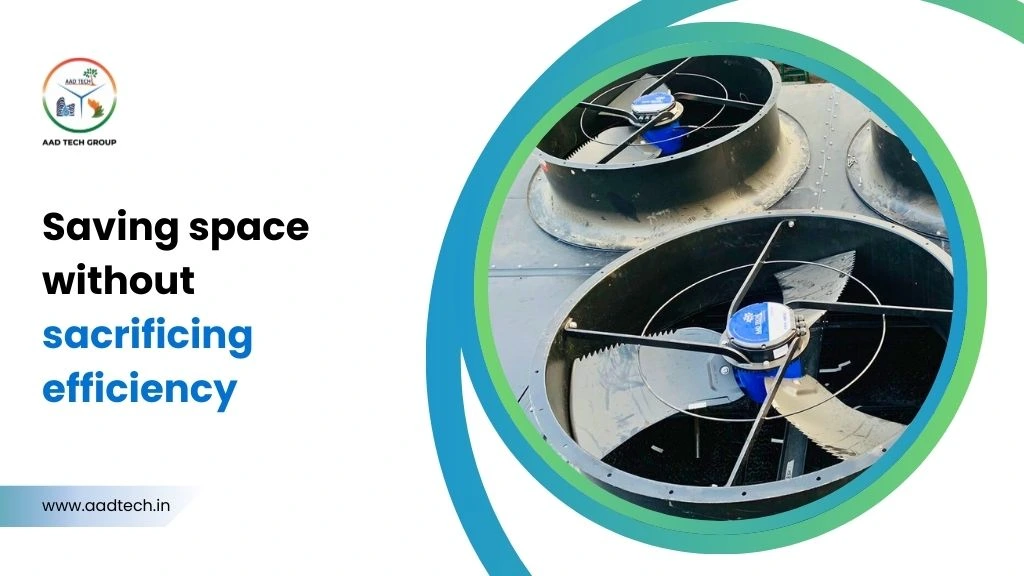
Modern plant rooms are shrinking, leaving little room for the massive belt-driven fans of the past. EC fans solve this space crisis by eliminating external motors and pulleys and by fitting the entire drive system directly inside the AHU plenum. This compact design does more than save space; it allows for leaner building layouts without sacrificing power or air quality. Architects and engineers now gain greater flexibility, as mechanical areas can be converted into rentable or usable floor space. This inherent compactness is a critical factor while designing new buildings as well as upgrading older buildings, where physical constraints often limit technical progress.
The Compact Secret to Huge Savings: Why We Switched to EC Fans
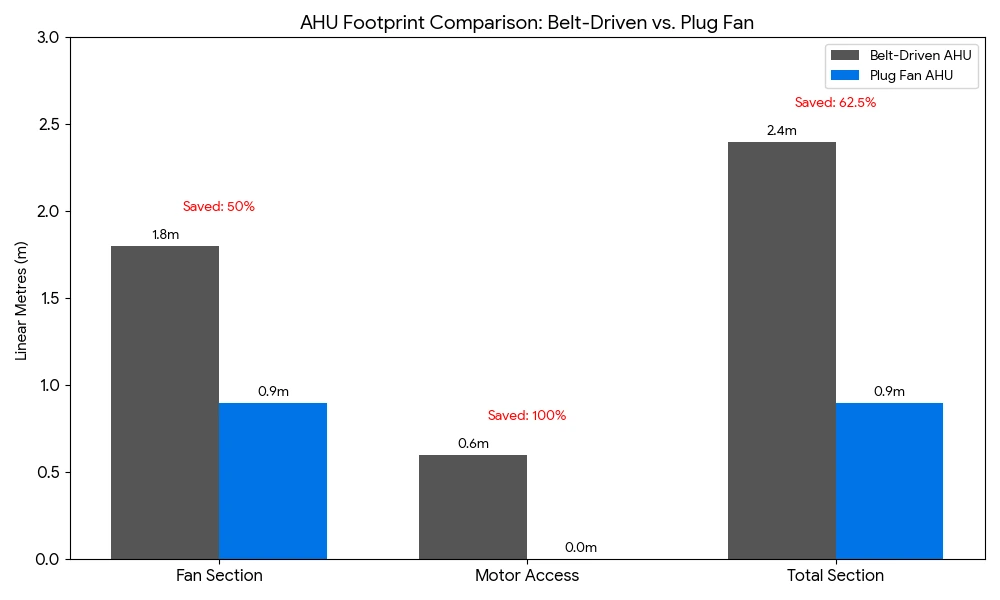
EC fans are direct-driven, integrated fan systems mounted directly within the AHU casework. They eliminate external casings, complex belt-and-pulley arrangements, and cumbersome motor mounts. This integrated design creates a dramatically smaller footprint compared to conventional belt-driven centrifugal fans. By removing the traditional drive components. Aad Tech India can design leaner, more efficient AHUs that fit into tighter gaps. This transition from external mechanics to a streamlined setup directly addresses the urgent need for smarter space utilisation in modern commercial construction.
Why Big Fans Are Dying Out
Traditional belt-driven fans feature large motors positioned outside the fan scroll. Power transmission relies on belts, which stretch, slip, and require regular tensioning. These systems necessitate significant clearance around the motor and pulleys for maintenance access. The physical components, heavy belts, sheaves, and robust frames, add considerable bulk to the AHU. This traditional setup, while proven, inherently limits design flexibility and expands the overall dimensions of the air handling unit.
Direct-driven EC fans operate without belts or an external pulley. Their motor is integrated directly into the impeller hub, creating a single, cohesive unit. This ingenious design eliminates all space-consuming external mechanisms. The entire assembly fits neatly within the AHU’s plenum chamber, minimising footprint. Furthermore, the modular nature of EC fans allows flexible configurations, including fan arrays that distribute airflow across multiple smaller units.
Turning Wasted Belt Space into Extra Cooling Power
The primary benefit of space savings extends beyond simply reducing AHU dimensions. The freed-up volume inside the unit creates invaluable opportunities for performance enhancement. Engineers can now integrate additional filtration stages, such as HEPA filters, which are crucial for cleanroom environments, hospitals, and pharmaceutical facilities. Space often dictates whether a facility can upgrade to higher air quality standards.
Alternatively, the reclaimed space can accommodate supplementary heat recovery coils. These coils capture waste heat or coolness from exhaust air, pre-conditioning incoming fresh air. Integrating heat recovery significantly boosts energy efficiency and reduces heating or cooling loads. A smaller chiller or boiler plant may be required, yielding further capital expenditure savings. The capacity to add these components within the same AHU footprint represents a substantial upgrade in system performance and sustainability.
The adaptability of compact EC fans benefits diverse building types. In high-rise commercial buildings, smaller AHUs free up valuable floor space, maximising rentable area. For data centres, the ability to pack more cooling capacity into less volume is paramount for managing heat loads. Selecting the right base unit is the first step in this optimisation; a detailed comparison of AHU types can help determine whether a horizontal, vertical, or ceiling-suspended configuration best fits your structural constraints. Hospitals, laboratories, and pharmaceutical plants leverage the space saved by EC fans to incorporate advanced air purification, ensuring stringent hygiene standards.
Solving India’s “Dirty Power” Problems with Smart EC Fans
Beyond mere space, these fans deliver substantial energy efficiency. They feature Electronically Commutated (EC) motors, which are inherently more efficient than traditional AC induction motors. EC motors operate with precise speed control, consuming only the power necessary for the required airflow. It eliminates energy losses associated with belt friction and motor inefficiencies common in older systems. Independent studies consistently demonstrate significant energy savings from EC motor adoption across all operating speeds.
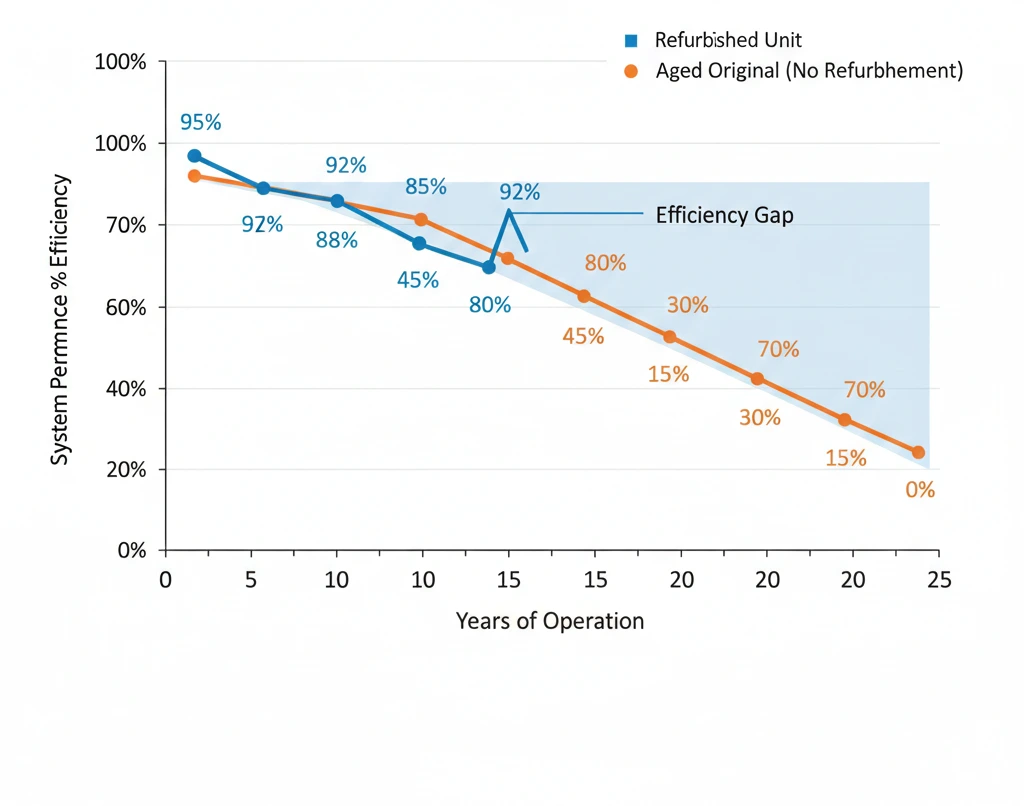
Indian industrial and commercial grids can experience voltage fluctuations and power quality issues. This “dirty power” severely impacts traditional motors, leading to overheating, reduced lifespan, and inefficiency. Modern EC motors, prevalent in high-quality EC fans, incorporate Active Power Factor Correction (PFC). This advanced feature protects the motor from voltage instability, ensuring consistent performance and longevity even under challenging grid conditions. To ensure these systems are operating at their peak design point, facility managers should regularly consult their system’s performance data. Aad Tech engineers design EC fans with robust electronics to withstand and perform optimally in diverse power environments, a crucial consideration for infrastructure resilience in the region.
Explore: The science behind airflow validation in modern AHU systems.
Stop Breathing Belt Dust: The Hidden Health Perk
Maintenance costs and downtime represent significant operational expenses for facility managers. Belt-driven fans require regular inspection, tensioning, and belt replacement. Misaligned belts cause premature wear and increased energy consumption. Bearings in belt-driven systems also endure higher radial loads, shortening their lifespan. Eliminating belts and external bearings in EC fans drastically reduces maintenance requirements. It translates to lower labour costs, fewer replacement parts, and minimal operational interruptions.
A less discussed but equally critical advantage lies in improved Indoor Air Quality (IAQ). Traditional belt-driven fans produce fine particulate matter from belt wear and tear, tiny rubber dust particles that circulate within the AHU. In sensitive environments like cleanrooms, hospitals, or food processing plants, this belt dust poses a contamination risk. Direct-driven EC fans totally eliminate this source, contributing to cleaner, healthier air streams. It makes them ideal for applications demanding the highest IAQ standards.
Aad Tech India excels in manufacturing and integrating these cutting-edge EC fans into bespoke AHU solutions. Our expertise spans optimising fan selection, designing modular configurations, and ensuring seamless integration with existing Building Management Systems (BMS). We understand the unique challenges faced by facility managers, from stringent energy targets to the relentless demand for space. Our commitment to innovation guarantees systems that perform reliably and cost-effectively, delivering long-term value. We ensure our products meet international standards, including ISO 12759 for fan efficiency, offering complete peace of mind.
The journey towards optimised building performance begins with intelligent design choices. Upgrading to direct-driven EC fans is not merely a component swap; it is a strategic investment in efficiency, reliability, and expanded operational capacity. These compact, powerful units are reshaping the landscape of HVAC engineering, empowering facility managers to do more with less.
Frequently Asked Questions
EC fans are direct-driven, impeller-only fan systems that mount directly into an AHU’s plenum. Unlike traditional belt-driven fans, they eliminate external casings, belts, and pulleys, integrating the motor directly into the impeller. This design results in a significantly more compact unit and higher energy efficiency.
Space savings are significant; switching to EC fans typically reduces the required fan section footprint by 50% to 60%. Use this reclaimed space for additional filtration stages, heat recovery coils, or to shrink the overall AHU footprint in tight plant rooms.
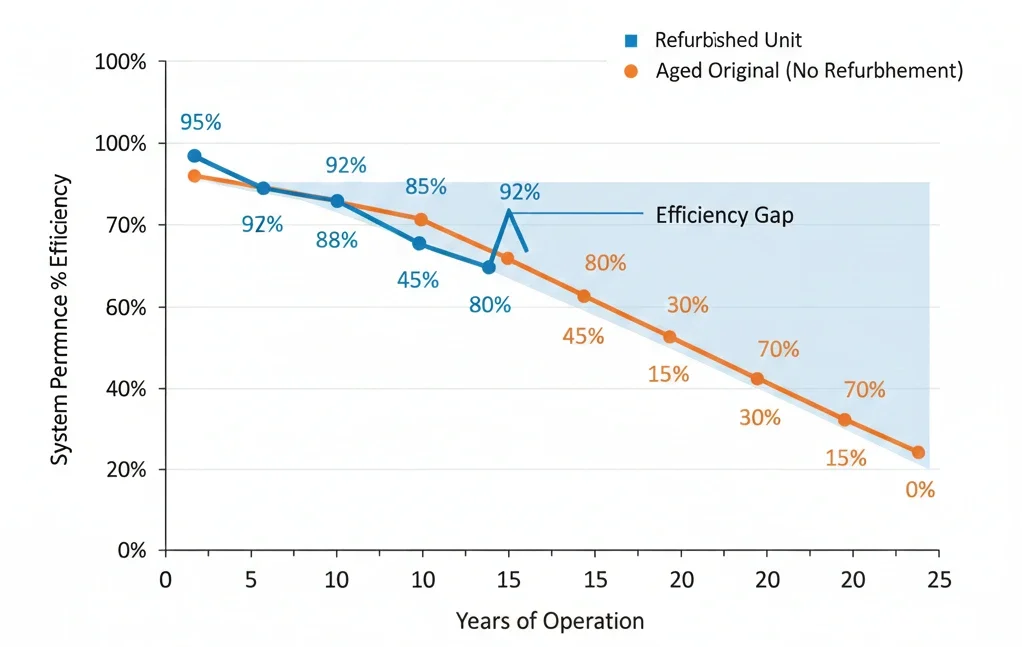
Yes, direct-driven EC fans are considerably more energy efficient, especially at partial loads. While traditional AC motors drop significantly in efficiency at lower speeds, EC-driven fans maintain efficiency levels often exceeding 85%, as seen in Figure 2.
EC fans drastically reduce maintenance needs. The absence of belts and pulleys eliminates routine tasks like belt tensioning and replacement, while also removing the source of harmful “belt dust” that can contaminate indoor air quality.
Absolutely. Aad Tech India specialises in AHU upgrade solutions, including the seamless integration of EC fans into existing infrastructure. Our engineering team assesses your current system and designs custom configurations to maximise space and energy savings.
Technical Data Sources
The performance metrics and space utilisation data cited in this article are synthesised from the following industry standards and technical studies:
- ASHRAE 90.1 (Energy Standard for Buildings): Performance data regarding fan power limitations and motor efficiency curves.
- BSRIA (Building Services Research and Information Association): Lifecycle analysis and spatial footprint comparisons between belt-driven and integrated EC fans.
- ISO 12759: International standards for fan efficiency labelling and classification.
- ISO 12759: International standards for fan efficiency labelling and classification.