
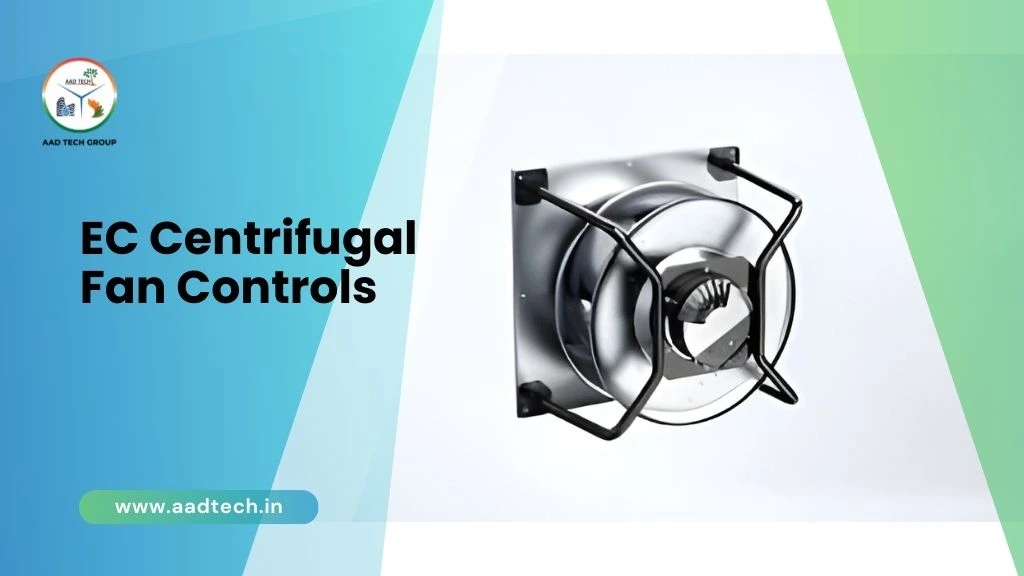
If you’re exploring modern ventilation or HVAC options, one question you’ll hear often is this: do EC centrifugal fans need special control systems to work properly? It’s a valid concern, especially when you’re deciding between traditional fans and advanced, energy-smart solutions.
EC centrifugal fans are not just another type of centrifugal fan. They integrate electronically commutated motor technology with the familiar radial airflow design of conventional centrifugal units. That combination delivers higher efficiency, variable speed capability, and precise performance. But does it also mean you need a special control system to make it all work? Let’s break it down so you see the whole picture.
What Makes EC Centrifugal Fans Different?
At the heart of an EC centrifugal fan is a built-in electronic motor controller. Instead of a traditional AC motor that spins at a fixed speed unless paired with an external drive, an EC fan’s motor adjusts speed and torque internally through electronic commutation. This design reduces energy losses and gives precise control over airflow.
Traditional Industrial centrifugal fans often rely on external controls like Variable Frequency Drives (VFDs) to change speed. With EC fans, the motor itself provides that capability without additional hardware.
Do You Automatically Need a Special Control System?
The short answer is no, not always.
EC centrifugal fans already include a smart motor control module that lets them vary speed based on simple input signals. Many models support basic control signals like 0–10 V or PWM straight from a building controller or thermostat. That means for many installations, you don’t need a separate, complex control system just to run the fan at different speeds.
These built-in capabilities let you start with a straightforward setup and still benefit from energy savings and performance improvements.
At What Point Does Advanced Control Become Necessary?
Here are a few examples where advanced control integration becomes worthwhile:
- Energy Optimisation in Real Time
A smart control system connected to occupancy sensors, air quality monitors, or CO₂ feedback can modulate fan speed dynamically. This avoids unnecessary airflow and cuts energy use further. - Precise Airflow Management in Critical Facilities
In environments like cleanrooms, laboratories, or data centres, maintaining exact pressure or airflow is essential. A control system that can respond to real-time conditions and adjust the EC fan accordingly provides the level of precision that static setups cannot deliver. - Seamless Integration with Larger HVAC Systems
When you want the fan to interact with thermostats, dampers, chillers, or a building management system (BMS), a specialised control platform allows all these elements to work together smoothly rather than independently.
In these scenarios, the EC motor’s electronic controller works better when it has meaningful signals to respond to. The control system isn’t doing the work for the fan; it’s giving it the right inputs at the right time.
Control Requirements Based on Application
Whether special control systems are a “must” depends largely on where and how the fan will be used. Here’s a quick guide:
| Scenario | Control Requirements | Notes |
| Simple exhaust or constant-speed ventilation | Basic input (0–10 V or simple switch) | No advanced controller needed |
| Variable airflow based on the environment | Moderate control integration | Use sensors or BMS inputs |
| Cleanroom or precision environment | Advanced specialised control | Real-time monitoring and feedback |
| Industrial processes with fluctuating load | High control automation | Integrated system logic improves efficiency |
This table helps you weigh whether the added control complexity matches the performance benefit you expect from your centrifugal fans.
How Special Control Systems Change Fan Behaviour?
With a dedicated control system, an EC centrifugal fan stops being a simple air mover and becomes a responsive component of your building ecosystem. It can do the following:
- Maintain target pressure or airflow by reading sensor inputs.
- Throttle up or down smoothly based on load or temperature.
- Communicate fault codes or performance data to your BMS.
- Reduce unnecessary power draw during low-demand periods.
This level of responsiveness cannot be achieved through fixed settings or basic speed switches alone.
Situations Where Special Controls Aren’t Necessary
EC centrifugal fans still perform well with built-in speed control for many applications:
- Small-scale ventilation
- Fixed-speed exhaust fans
- Basic HVAC zones
- Environments with stable airflow requirements
In these cases, the onboard controller of the EC fan and simple user inputs may be enough, saving you cost and complexity without undermining performance.
Conclusion
So, do EC centrifugal fans need special control systems? The honest answer is that they don’t always need them. Thanks to integrated electronic commutation and built-in speed control, many EC centrifugal fans perform efficiently with basic control inputs.
But if your goal is fine-tuned energy optimisation, precision airflow regulation, or seamless integration with a broader HVAC or building automation system, specialised control systems unlock the full potential of these advanced fans. That’s especially true for Industrial centrifugal fans working under varying loads and performance demands.
Choosing the right control strategy is not about adding complexity for its own sake. It’s about matching your operational goals with the capabilities of the fan system so that performance, energy use, and reliability all move in harmony.
If you’re considering EC centrifugal fans and need help evaluating the right control setup for your facility, we can help you explore options that align with your performance and efficiency goals.
Frequently Asked Questions
Yes, many EC centrifugal fans include built-in controllers that accept simple input signals and can run efficiently without advanced systems.
They often support standard signals like 0–10 V or PWM for speed adjustment.
When you need real-time adjustment based on sensors, integration with a BMS, or precise airflow/pressure control.
Yes. By modulating fan speed according to actual demand, advanced controls maximise energy efficiency.
Many models can integrate with BMS platforms via control protocols and inputs.