
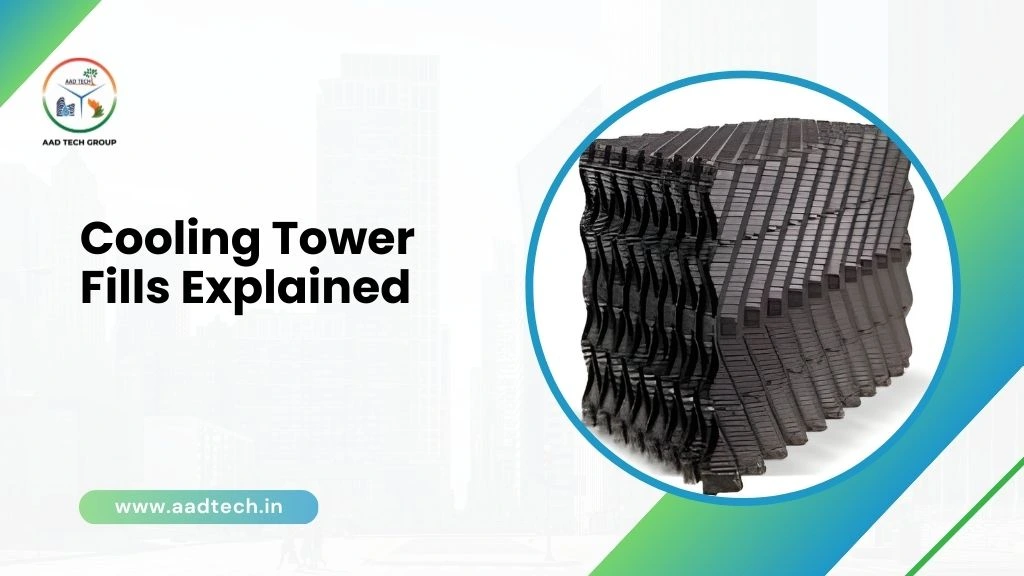
If you’ve ever stood near a cooling tower and wondered what actually makes all that heat disappear, the answer is simpler than it looks. It isn’t just the fan. It isn’t only the water flow. The real work happens inside the fill.
Cooling tower fills are where water spreads, air meets it, and heat quietly transfers away. When fills perform well, your cooling tower feels stable, efficient, and predictable. When they start failing, you notice temperature drift, rising energy use, and more frequent maintenance. And yes, you might even find yourself asking, why does the tower suddenly feel harder to manage than before?
Let’s unpack what cooling tower fills really do, why they matter so much, and how they affect performance across sensitive environments, including Cleanrooms and integrated Cleanroom Solutions.
What Cooling Tower Fills Actually Do?
Think of the fill as the working surface of the cooling tower. Its job is to create as much contact area as possible between warm water and moving air. The more surface area you create, the faster heat escapes.
When water flows over the fill sheets or blocks, it spreads into thin films or droplets. Air passes through this wet surface and absorbs heat through evaporation and convection. That’s the entire cooling process in motion.
If the tower fill becomes clogged, damaged, or uneven, that heat exchange slows down. You may still see water flowing and fans running, but the tower simply cannot reject heat efficiently anymore.
Why does Fill Performance Directly Affect Your System?
You might not always see tower fill issues immediately, but you’ll feel them in system behaviour.
Common signs include:
- Higher outlet water temperature than usual
- Fans running longer or harder to compensate
- Increased power consumption
- More frequent chemical dosing or cleaning
- Reduced cooling capacity during peak load
If you operate facilities where thermal stability is critical, such as manufacturing lines or Cleanrooms, even small inefficiencies in fill performance can ripple into product quality, humidity control, and equipment reliability.
Types of Cooling Tower Fills You Should Know
Film Fill
Film fill spreads water into thin layers across textured surfaces. This maximises heat transfer efficiency and is commonly used in applications where water quality is relatively controlled.
You’ll often find film fill in installations where energy efficiency and compact design matter.
Splash Fill
Splash fill breaks water into droplets by allowing it to fall across a grid or slatted structure. It handles dirty or debris-heavy water better than film fill but usually offers slightly lower thermal efficiency.
If your water carries solids or biological load, splash fill may be more forgiving.
How Does Fill Design Influence Airflow and Fan Load?
You might assume that fill only affects heat transfer, but it also shapes how hard your fans need to work. Dense fill increases surface area, but it also raises air resistance. If airflow struggles to pass through the fill pack, fan energy rises and airflow balance shifts.
This matters when you are managing multiple zones or sensitive environments where stable airflow supports temperature and humidity control. When fill density and airflow resistance are mismatched, the system compensates by running fans longer or at higher speeds, quietly increasing operating cost and mechanical wear.
What Happens When Fill Efficiency Starts Declining Gradually?
Fill rarely fails overnight. Performance usually declines slowly as scale accumulates, surfaces smooth out, or airflow passages narrow. Because the change is gradual, it is easy to adjust operations without recognising the root cause.
You may notice cooling margins shrinking during peak load, slightly longer equipment run times, or increased chemical usage. These are early signals that fill performance is drifting and deserves closer inspection.
How Preventive Maintenance Protects Fill Performance?
Good maintenance goes beyond cleaning. It includes monitoring water chemistry, ensuring even water distribution across the fill, checking spray nozzle alignment, and verifying airflow balance.
Simple practices such as routine visual inspection and seasonal performance tracking prevent premature degradation. When maintenance remains consistent, fill life extends significantly, protecting both thermal performance and operational stability.
How Water Quality Shapes Fill Life?
Water quality quietly determines how long your fill performs well. Scale buildup reduces surface area. Biological growth blocks airflow. A chemical imbalance weakens material strength.
If water treatment is unstable, even high-quality fill degrades faster than expected. Replacing fill without addressing water chemistry often leads to repeated failures.
Why Fill Health Matters in Controlled Environments?
In sensitive facilities such as pharmaceutical plants, electronics manufacturing, and Cleanrooms, cooling stability directly supports temperature control, humidity regulation, and equipment reliability.
If cooling performance fluctuates because fill efficiency drops, downstream systems compensate. That often means higher energy use, wider temperature swings, and reduced environmental precision. Reliable Cleanroom Solutions depend quietly on consistent cooling performance in the background.
When Should You Inspect or Replace Cooling Tower Fills?
You don’t need to wait for failure to evaluate fill condition. Visual inspection, thermal performance tracking, and airflow monitoring often reveal early warning signs.
Consider inspection or replacement when:
- Outlet temperatures remain unstable despite normal airflow
- Visible scaling, fouling, or brittleness appears
- Cleaning frequency increases without lasting improvement
- Energy use rises without a corresponding load increase
Proactive assessment prevents emergency downtime and protects long-term reliability.
Discover our blog on leading clean room FFU manufacturers and their role in processed air supply.
Choosing the Right Fill Is a System Decision
Fill selection depends on water quality, operating temperature, airflow design, maintenance access, and long-term operational goals.
If you manage facilities that include production areas and Cleanrooms, the cooling system must perform consistently across all zones. Selecting fill based only on catalogue ratings without understanding system behaviour often leads to mismatched expectations.
Conclusion
Cooling tower fills may sit quietly inside the structure, but they carry the real responsibility for heat transfer and system stability. When fill performance declines, the entire cooling process feels the impact long before obvious failure appears.
If you want reliable cooling across critical environments such as Cleanrooms and dependable Cleanroom Solutions, it pays to understand how fill design, water quality, and maintenance discipline work together. A thoughtful review today often prevents costly surprises tomorrow. At Aad Tech, we help facilities take that long-term, system-level view.
Frequently Asked Questions
Cooling tower fill increases surface area so water and air can exchange heat efficiently.
Rising outlet temperatures, higher fan runtime, frequent cleaning, and increased energy use are early signs.
Film fill offers higher efficiency with clean water, while splash fill handles dirty water better.
Poor water chemistry causes scaling and biological growth that reduces heat transfer and airflow.
Stable cooling supports temperature and humidity control, which protects cleanroom processes and equipment.
Visual checks should be done regularly, with deeper inspections scheduled seasonally or during shutdowns.