
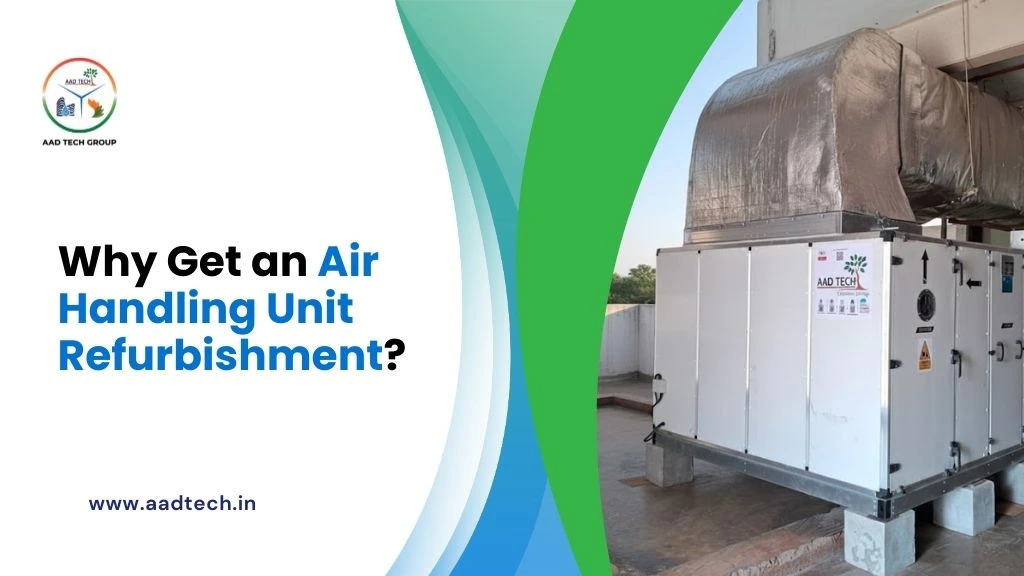
Have you ever stepped into a building and felt the air was heavier than it should be, even though the system was technically running? In many cases, the issue does not lie with the building itself but with an ageing air handling unit that has slowly lost efficiency over time. This is where the idea of refurbishment begins to make sense. Instead of replacing an entire system, many facility teams now pause and ask whether an air handling unit refurbishment could restore performance without the disruption and cost of a full replacement.
As buildings evolve and energy standards tighten, the role of refurbishment has become more strategic than reactive.
What Does Air Handling Unit Refurbishment Really Mean?
An air handling unit refurbishment focuses on upgrading and restoring an existing AHU so it performs closer to modern standards. This may include replacing worn components, improving airflow paths, detecting and sealing any leakages, upgrading fans or controls, and enhancing filtration. Rather than discarding the entire unit, refurbishment builds on the strength of the existing structure.
This approach is often chosen when the AHU casing and layout are sound, but internal components no longer match current efficiency or air-quality expectations.
Benefits of Getting an Air Handling Unit Refurbishment
Lower Capital Cost Without Compromising Performance
One of the strongest reasons to consider an air handling unit refurbishment is cost. Industry data shows that refurbishment can cost significantly less than full replacement, often around 20–40 percent of the price of a new AHU, depending on scope and condition. For organisations managing large facilities or multiple sites, this difference matters. Refurbishment allows budgets to stretch further while still delivering improvements in airflow, comfort, and reliability.
Measurable Gains in Energy Efficiency
Older AHUs were built for a different energy landscape. With rising energy costs and sustainability goals, inefficiencies that once went unnoticed now have a direct financial impact. Through air handling unit refurbishment, components such as fans, coils, and control systems can be upgraded to modern, energy-efficient alternatives.
Studies indicate that refurbishing HVAC systems can reduce energy consumption by 20 to 50 percent, depending on the upgrades implemented.
Considering that HVAC systems can account for up to 40 percent of a building’s energy usage, these gains quickly translate into long-term savings.
Extended Equipment Life and Better Asset Value
Air handling units are built with durable frameworks that often outlast their internal components. Refurbishment allows building owners to retain this structural strength while replacing parts that experience wear. In many cases, an AHU can gain an additional 10 to 15 years of service life after refurbishment.
This approach improves asset value and delays the need for major capital expenditure. For facilities that aim to plan upgrades in phases, refurbishment offers a controlled and predictable path forward.
Improved Indoor Air Quality and Compliance
Indoor air quality has moved from being a comfort issue to a compliance requirement. Outdated filtration systems and inconsistent airflow can affect health, productivity, and regulatory standing. An air handling unit refurbishment provides an opportunity to upgrade filters, improve air distribution, and align performance with current indoor air quality standards.
Refurbished systems often deliver better air cleanliness and more consistent temperature control, which is especially important in offices, healthcare spaces, and industrial environments.
Reduced Downtime Compared to Full Replacement
Replacing an AHU can involve structural changes, extended shutdowns, and logistical challenges. Refurbishment, by contrast, can often be planned in stages to reduce disruption. Many projects are carried out while keeping large parts of the building operational.
This makes refurbishment an attractive option for facilities where downtime directly affects productivity or service delivery.
Opportunity to Integrate Smarter Controls
Another advantage of refurbishment is the chance to modernise system controls. Older AHUs often lack real-time monitoring or integration with building management systems. During refurbishment, sensors, automation, and smarter control logic can be added.
These upgrades allow operators to track performance more accurately, respond to changes faster, and fine-tune energy usage based on occupancy or demand.
This is an area where experienced engineering partners play a key role, ensuring upgrades are practical rather than over-engineered.
Learn more about how AHU retrofit improves efficiency and long-term returns.
A More Sustainable Way Forward
Refurbishment supports sustainability by reducing waste and avoiding the environmental cost of manufacturing and transporting new equipment. Retaining the existing AHU structure significantly lowers embodied carbon and aligns with circular building practices.
Source: https://en.wikipedia.org/wiki/Sustainable_refurbishment
For organisations working toward sustainability targets, refurbishment offers a meaningful step without sacrificing performance.
Where Expertise Makes the Difference
While refurbishment offers many benefits, its success depends on careful assessment and execution. Each AHU presents different challenges based on age, usage, and operating conditions. This is where experienced solution providers such as Aad Tech add value. By focusing on performance-driven upgrades rather than one-size-fits-all replacements, we help ensure that refurbishment delivers measurable improvements in efficiency, airflow, and reliability.
Conclusion
Choosing between replacement and refurbishment is rarely a simple decision. In many cases, an air handling unit refurbishment provides the balance building owners are looking for—lower cost, better energy performance, improved air quality, and extended system life.
At Aad Tech, we approach refurbishment as a strategic upgrade rather than a short-term fix. By combining technical evaluation with practical engineering solutions, we help facilities restore and improve their air handling systems in a way that aligns with modern performance and sustainability expectations.
For buildings looking to get more from their existing infrastructure, refurbishment is often not just an option, but the smarter path forward.
Frequently Asked Questions
It should be considered when the AHU structure is sound but performance, efficiency, or air quality has declined. Refurbishment is often suitable if the unit no longer meets current energy or comfort expectations but does not require full replacement.
Yes, refurbishment typically costs significantly less than installing a new unit, often between 20 and 40 percent of replacement costs. It also avoids additional expenses related to structural changes and extended downtime.
Yes, upgrading fans, controls, and internal components can reduce energy consumption by a noticeable margin. Many refurbished units achieve efficiency levels close to newer systems when upgrades are planned correctly.
Refurbishment allows for better filtration, improved airflow balance, and updated components that support cleaner air. This can lead to more consistent temperature control and healthier indoor environments.
A well-executed refurbishment can extend the life of an AHU by 10 to 15 years or more. The exact lifespan depends on usage conditions, maintenance practices, and the scope of upgrades performed.
In most cases, refurbishment causes far less disruption than a full replacement. Work can often be planned in stages to keep the building operational during the upgrade process.