
Modern HVAC systems generate massive data. Without smart control, even the best equipment wastes energy. Airflow demands shift constantly. Occupancy changes. Filters clog. Energy costs rise.
A modern building management system HVAC handles these shifts in real time. For HVAC consultants and facility engineers, a BMS System in HVAC is the central brain of the system. It controls airflow, saves energy, and flags faults.
What Is a Building Management System in HVAC?
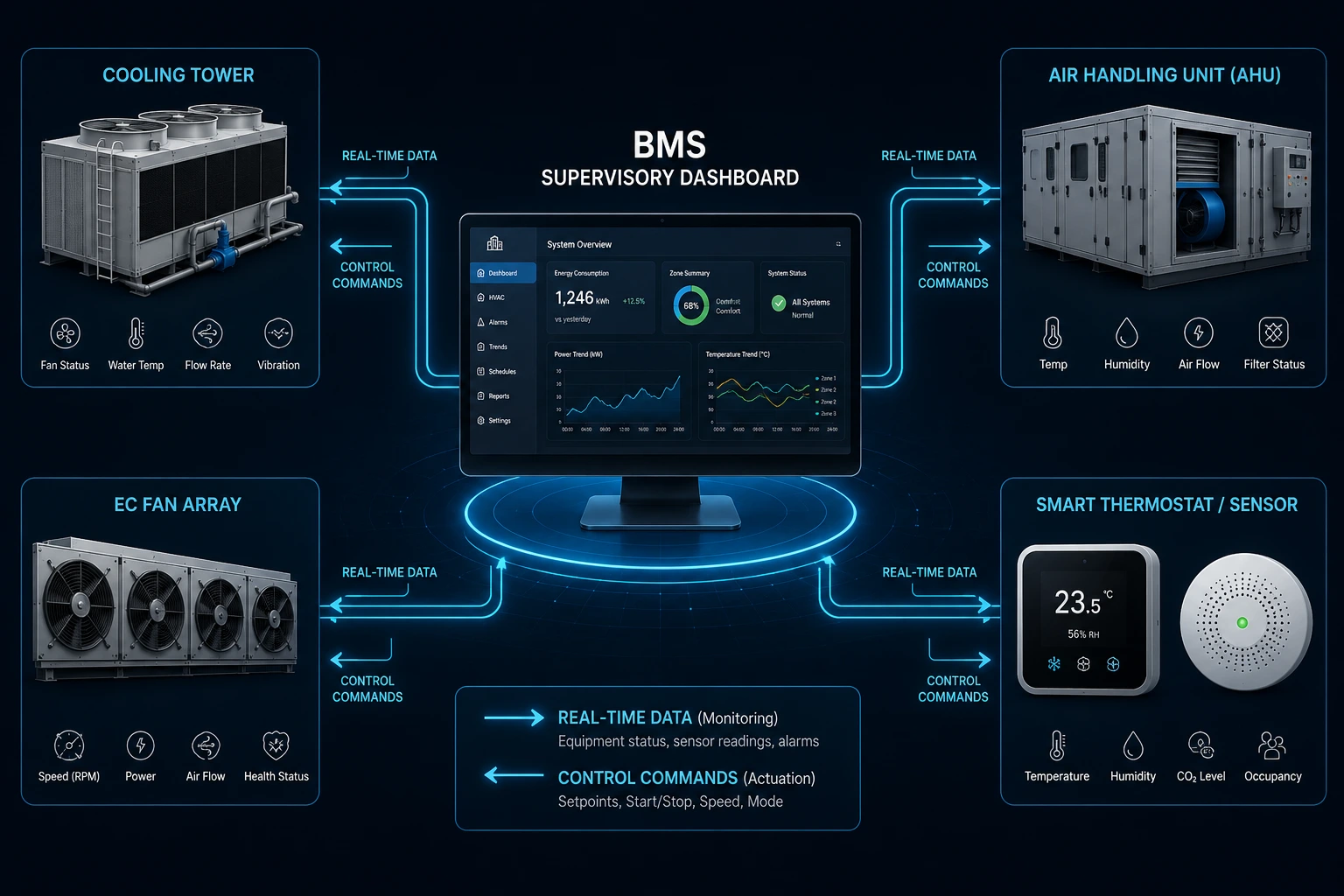
A BMS is a central control hub. Instead of running equipment in isolation, a building management system’s HVAC connects mechanical assets into one smart network.
This system includes:
- Chillers and cooling towers
- Air Handling Units (AHUs)
- Pumps and VAV systems
- Electronically Commutated (EC) fans
- Sensors, dampers, and pressure controls
(Source)
Why HVAC Systems Need BMS Integration
Without intelligent BMS HVAC controls, systems waste power. Equipment runs at full speed all the time. Airflow becomes unstable. Maintenance stays reactive.
Top HVAC performance relies on real-time teamwork. Your mechanical gear is only as smart as its control logic.
Core Components of an HVAC BMS System
An HVAC BMS system uses four main layers to turn physical data into digital action.
Sensors
They track temperature, humidity, CO₂, duct pressure, and airflow.
Controllers
PLCs and DDC controllers read sensor data and run automated commands.
Actuators and Field Devices
These execute commands. They include dampers, valves, VFDs, and EC fan controls.
Supervisory Software
The software gives operators visual data, alarms, and fault logs to manage the building.
How BMS HVAC Controls Improve Energy Efficiency
A BMS cuts waste by stopping static operation. It adjusts airflow and cooling dynamically. According to the NSW Government Energy Efficiency Guide, basic stop/start logic saves up to 10% on energy. CO₂-based ventilation saves up to 20%. Pressure resets can cut fan energy by 30%.
Technical Insert: The Fan Affinity Law
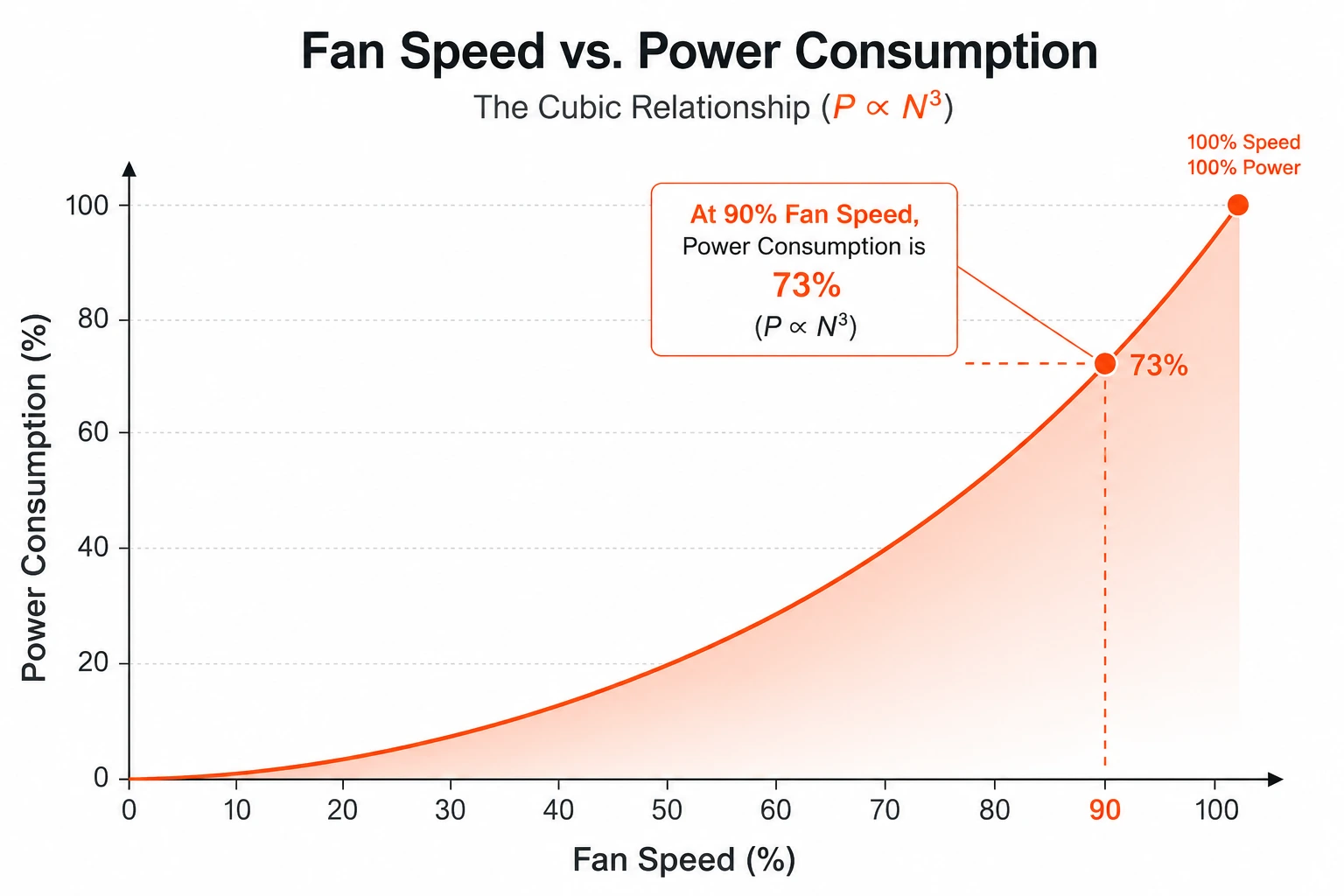
Fan power and speed follow a strict rule:
$$P \propto N^3$$
Because power ($P$) scales with the cube of fan speed ($N$), small speed drops save significant power. Cutting speed by 10% drops power use by 27%. Such cuts make speed-controlled gear highly profitable.
(Source)
How BMS Systems Control Airflow and Pressure
Airflow control is vital for pharma plants and cleanrooms. A sharp BMS system in HVAC handles:
- Pressure cascades for cleanrooms
- Airflow balancing across zones
- Filter pressure adjustments
- Duct pressure optimisation
In sites governed by the FDA Current Good Manufacturing Practice (CGMP) Regulations, smart BMS HVAC load control reduces total plant energy consumption by 12–20%.
Cooling Tower Optimisation via BMS
A BMS also runs the waterside. A cooling tower cannot cool circulating water below the entering air wet bulb temperature under normal operating conditions. A smart BMS HVAC system stops operators from confusing bad weather with broken gear.
The system logs wet bulb temperature, range, approach, and motor current. The BMS automates blowdown when dissolved solids reach a threshold. By matching fan speed to actual demand, it prevents common cooling tower issues and provides practical fixes.
Why EC Fans Work Better with Modern BMS Platforms
Fixed-speed fans limit a building management system’s HVAC. You cannot optimise what you cannot modulate.
If you are evaluating EC technology’s advantages over conventional AC fans, consider integration. EC fans fit seamlessly into BMS HVAC platforms. They offer precise speed control and high RPM accuracy, bringing stable cooling and lower power use.
Common HVAC Parameters Monitored by a BMS
Table A: Cooling Tower Parameters
| Parameter | Operational Importance |
| Supply air temperature | Thermal stability |
| Return air humidity | Latent load control |
| Static pressure | Airflow stability |
| Filter differential pressure | Maintenance planning |
| Fan speed | Energy optimisation |
| Motor current | Predictive maintenance |
Table B: Air Handling Parameters
| Parameter | Operational Importance |
| Wet bulb temperature | Base limit for tower cooling performance |
| Approach | Shows how close the tower operates to the evaporative limit |
| Range | Actual heat removed from circulating water |
| Conductivity | Blowdown and scale control decisions |
BMS Alarms: Facility Engineers Must Never Ignore
Alarms catch small faults early. Watch out for:
- Outlet water temperature rises even when the fans are running at full speed.
- The approach increases beyond the normal site trend.
- Motor current exceeds nameplate limits.
- Sudden static pressure drops.
- Airflow missing set targets.
Common Problems in Poorly Designed HVAC BMS Systems
Bad setups often suffer from:
- Noisy sensors that confuse the system
- Over-automation and flawed logic
- Bad PID tuning causing short-cycling
- Poor airflow calibration
- Weak links between mechanical units
How Modern BMS Systems Enable Predictive Maintenance
Modern HVAC BMS systems network to fix problems before they happen. They offer:
- Motor current checks to detect overload and bearing problems.
- Vibration tracking to catch imbalance and blade damage.
- Pressure trends to predict filter failure.
The Future of HVAC BMS Systems
Building automation now moves toward proactive logic. The future includes AI-driven tweaks, digital facility twins, cloud data checks, and remote fixes.
The Final Verdict: Is Your HVAC Actually Smart, or Just Expensive?
HVAC success requires smart control. A modern system must sense, interpret, and adjust in real time. For facility engineers, buying smart control logic is just as vital as buying the mechanical gear.
Frequently Asked Questions
A smart BMS cuts fan energy by up to 30% and space cooling costs by 20% through dynamic adjustments. It stops your equipment from running at full load when demand is low.
Ready to lower your plant’s power bills? Contact AAD Tech Group to evaluate your energy-saving potential.
High humidity raises the wet-bulb temperature, limiting evaporative cooling. A BMS tracks these wet bulb changes to optimise fan speeds. For seasonal cooling challenges, consider a cooling tower readiness audit with AAD Tech.
Legacy fixed-speed fans severely limit your BMS. You cannot optimise what you cannot modulate. EC fans offer precise speed control, resulting in significant energy savings at part load.
Want to take full control of your airflow? Ask AAD Tech about seamless EC fan retrofits.
It shifts your team from reactive to predictive maintenance. By tracking motor currents and vibrations, a BMS helps detect imbalance, loose parts, and bearing wear before a catastrophic breakdown.
Yes. Upgrading your control logic is just as critical as buying new mechanical gear. A proper retrofit connects your existing chillers, AHUs, and towers into one smart network.
Need smarter facility control? Reach out to AAD Tech Group for a custom integration plan.